RISE is rooted in practice. We work in two contrasting agrifood regions where researchers and regional stakeholders jointly explore how biodiversity restoration can become part of everyday decision-making. Reusel-Zuid is centred around an established community of farmers and partners working on innovation in field agriculture, while Oostland Zuid-Holland is one of the Netherlands’ major greenhouse horticulture regions. By working in these different contexts, RISE can explore how ecological, social and economic conditions shape opportunities for nature-inclusive transitions.
Reusel-Zuid
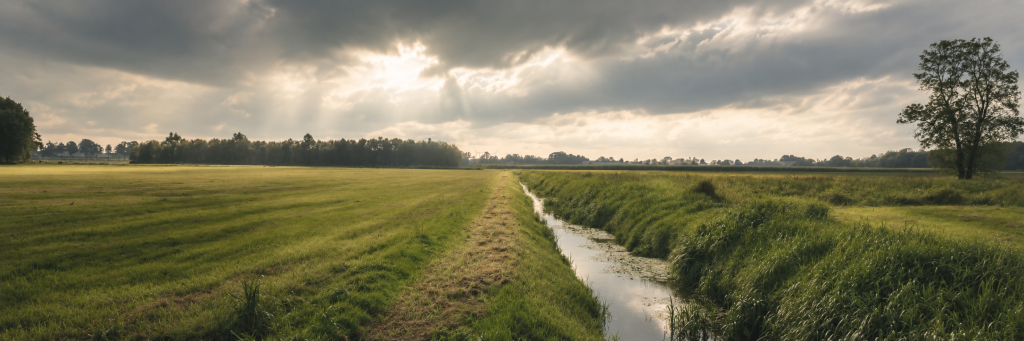
Reusel-Zuid combines a strong agricultural tradition with a long history of experimentation and collaboration. At the heart of the region is VDBorne Campus, which has developed from a potato farm into an international hub for innovation in precision agriculture. Farmers, businesses, technology developers, researchers and public authorities have worked together here for many years on challenges including crop rotation, manure use and strip farming. More recently, biodiversity has become an increasingly important part of this regional collaboration, with initiatives such as biodiversity strips and insect corridors exploring how productive agriculture can go hand in hand with a healthy and attractive landscape.
For RISE, Reusel-Zuid provides a rich setting to study the interaction between agriculture, biodiversity, water, land use and value chains. The region brings together farmers and other landowners, public authorities, water management organisations and nature groups, while its agricultural businesses are simultaneously embedded in national and international supply chains. These different actors all influence the conditions under which nature-inclusive choices become possible.
Together with regional stakeholders, RISE will explore how ecological ambitions can be reconciled with viable agricultural businesses, how the costs and benefits of biodiversity restoration can be shared across value chains, and how collaboration can create the conditions and incentives needed for lasting change. GreenTechPort Brabant and VDBorne Campus facilitate the regional community of practice.
Oostland Zuid-Holland
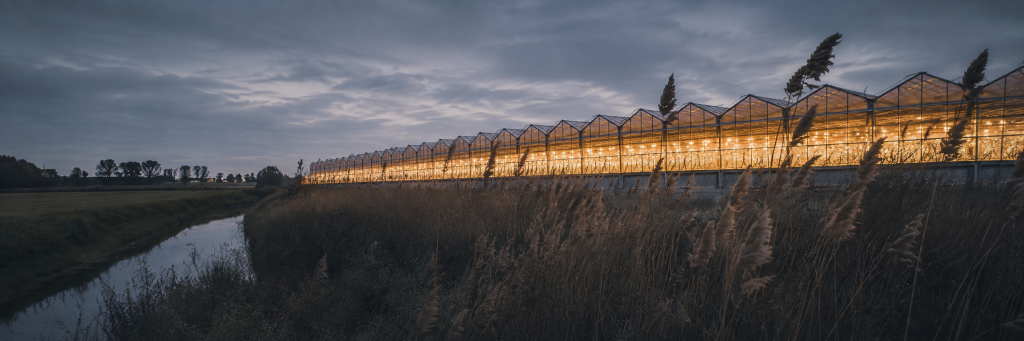
Oostland is one of the most important greenhouse horticulture regions in South Holland. Growers, the Municipality of Lansingerland, educational institutions, water authorities and sector organisations have been working together to strengthen biodiversity in and around greenhouse areas. Several horticultural businesses are already experimenting with nature-inclusive measures, while initiatives such as ecological bio-based rafts in waterways and adapted mowing regimes aim to create better conditions for vegetation, insects, fauna and aquatic life.
At the same time, Oostland illustrates the complexity of integrating biodiversity into an intensive horticultural region. Knowledge about how biodiversity affects greenhouses and crops remains fragmented, while decisions about the surrounding landscape involve many different stakeholders and interests. Municipalities, growers, maintenance organisations, water authorities, residents and nature organisations all interact within the same regional system.
Through RISE, these actors will jointly explore an area-based ecology that supports horticultural entrepreneurs and their crops while simultaneously contributing to a more biodiverse and resilient regional ecosystem. The region provides an important setting for connecting biodiversity monitoring with business decision-making, spatial development and collective action. Greenport West-Holland facilitates the regional community of practice.
Validation region
Zundert
A third region will help us test whether the RISE approach can travel. In the final phase of the project, the methods, models and implementation pathways developed in Reusel-Zuid and Oostland will be validated in Zundert. The region has a large tree nursery sector, with around 180 nurseries involved in a regional programme aimed at improving biodiversity.
Together with regional actors including Varta, Treeport BCT and the wider Treeport network, RISE will use this distinctly different agricultural context to test and refine its approach. This validation step will help identify which elements of the RISE methodology are broadly transferable and which need to be adapted to local ecological, institutional and socio-economic conditions.
The lessons from Zundert will feed into a context-sensitive replication framework, supporting other agrifood regions that want to apply and adapt the RISE approach to nature-inclusive decision-making.